Description
Learn how to represent different surfaces by drawing textures. This exercise builds your ability to suggest materials through marks, not detail copying. Focus on capturing the feel of a texture rather than replicating it exactly.
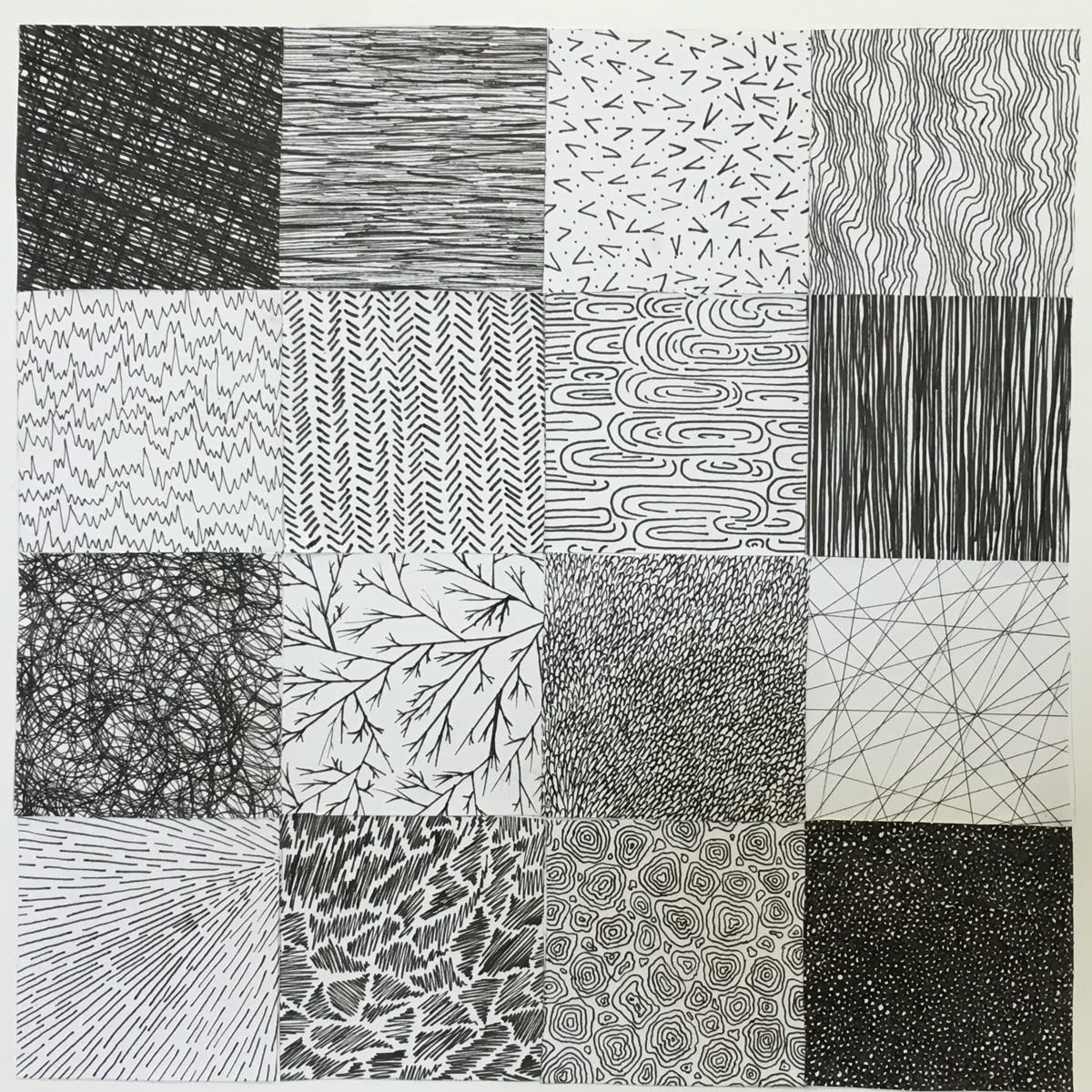
Level 1 — Texture Grid
- Draw a grid of squares across the page
- In each square, draw a different texture
- Use imagination or reference images for ideas
- Focus on the overall pattern and rhythm of the texture
- Avoid copying exactly — interpret and simplify
Tips
- Think in patterns, not individual details
- Keep textures readable at a glance
- Vary density to suggest light and shadow
- Experiment with different tools and pressure
Level 2 — Texture on 3D Forms
Apply textures to simple 3D shapes.
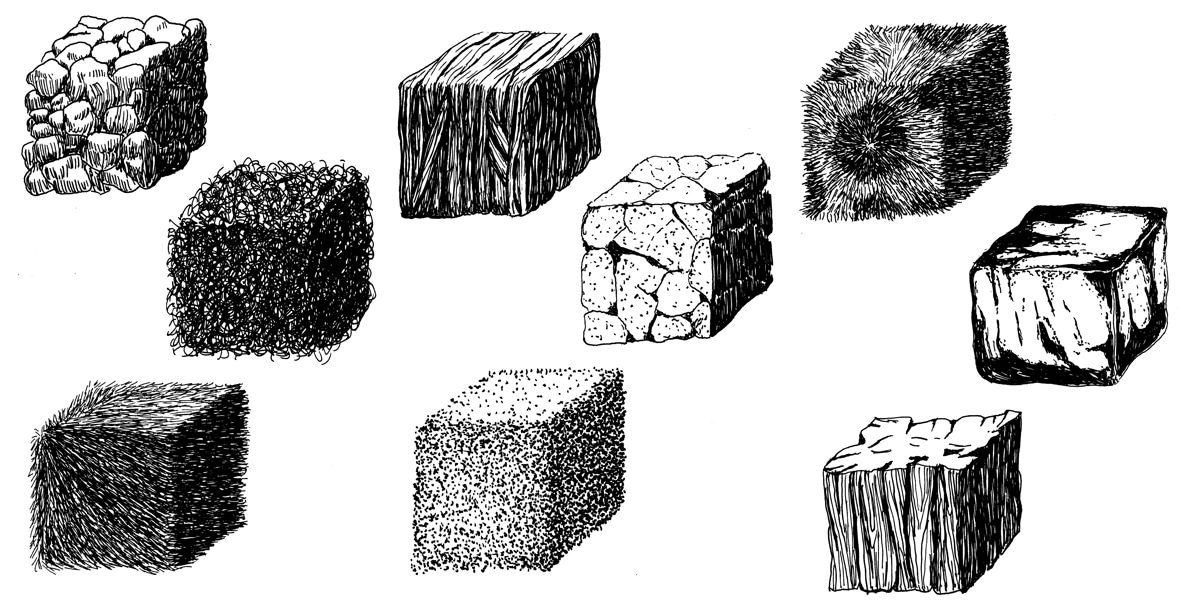
Steps
- Draw basic forms (cube, cylinder, sphere)
- Choose a texture for each form (wood, metal, fabric, stone, etc.)
- Wrap the texture around the form to follow its shape
- Adjust density and value to match light and shadow
- Keep the form readable — texture should support, not overpower it
Tips
- Follow the direction of the form (curves, planes)
- Use shading to reinforce volume
- Simplify texture in shadow areas
- Don’t outline every detail — suggest instead
Key Idea
Texture is not about copying — it’s about translation.
Capture the essence of a surface using marks, rhythm, and value.